
Creating a manageable charitable donation program
You’ve probably been approached hundreds of times to participate with local charities and asked to do everything from donate merchandise for silent auctions to springing for sponsorship dollars, organizing walking teams and buying tables at banquets.
Before you spend another dollar, take a minute to think about how you give your money, merchandise and time.
You’ve probably been approached hundreds of times to participate with local charities and asked to do everything from donate merchandise for silent auctions to springing for sponsorship dollars, organizing walking teams and buying tables at banquets.
Before you spend another dollar, take a minute to think about how you give your money, merchandise and time.
There are two ways to approach charitable giving. The first is altruistic. If you have a cause or passion in which you want to participate because it’s meaningful to you, by all means, do so. This is not a business decision, it’s one that comes from the heart.
The second is using charitable involvement as a business builder. For the purposes of this discussion, we’ll talk about the latter.
Let’s start with merchandise and gift card donations.
I highly recommend creating an annual budget and formal process for giving donations. This allows you to handle your giving gracefully and without creating bad feelings. You certainly don’t want to offend representatives of local organizations by having them think you are snubbing them or don’t take your community participation seriously. After all, they may be potential customers.
To avoid an uncomfortable situation, create a charitable donation request form for the organization to complete including their charity name, contact person, reason for the donation (i.e. silent auction, raffle, etc.), purpose of the charity, how long in business and their 501(c)3 number which a legitimate nonprofit must have and finally, what type of recognition you will receive for your donation, i.e. logo on all event marketing, signage at event, etc.
Explain to them:
• As a small business, you have an annual budget for charitable giving
• All requests must be submitted in writing
• You evaluate all requests monthly, make your choices and will notify them of your decision at that time.
Be sure to review these forms on a regular, predetermined timetable and notify all applicants of your decision.
The formal process will help mitigate bad feelings from the rejected parties and help you make the most of your charitable contributions.
Get Creative
There’s no law that says you need to give money or merchandise to support your local non-profits. Think about:
Volunteering
Can your staff help at an event or fundraiser?
Create an experience
How about a free wardrobe styling or haircut? A cupcake baking or pizza making lesson? These experiences have great perceived value and help to build a one-on-one relationship with potential customers.
After the giving
Keep the momentum going by continuing to promote yourself and your selected charities. Post signage in your store about upcoming events that you’re involved in. Promote them on your website and social media as well. At the end of the year, compile a list of your selected charities and encourage customers to include them in their charitable giving.
Bottom line
Take a few minutes to create a process and through in a couple of creative ideas. It will save time, make your store or restaurant stand out from the fray of ordinary gift cards givers and establish your business as a valuable member of your community
Until next time remember,
You can do this!
Angel

Employee training. How to create an easy annual plan.
Formal training is a touchstone of almost every other industry. Why not retail?
TRAIN THEM TO SUCCEED
Even the best structured reward plan, the most inventive career path or the most enthusiastic motivation won’t give you the desired results unless your employees are well trained. This goes far beyond onboarding. It’s about consistent, meaningful and measurable education. Formal training is a touchstone of almost every other industry. Why not retail?
When staff is well trained, they perform better. When they perform better, they have greater job satisfaction which ultimately leads to increased tenure. It’s another win-win.
You’ve heard the expression, hire for personality, train for skill. Training can create a significant improvement in staff attitude and performance but only if you believe in it as well. To half-heartedly deploy a program even the best training programs won’t if you don’t believe in them. And by training, I don’t mean just how to use the POS or what the store policies are, I mean sales training, customer service training and product training as well.
Think it’s too much work? I’m going to give you a 4-time per month sales training program outline right here that you can use as the basis of your annual plan. You can probably outline your entire years’ worth of training in about an hour. Each session should be about 30 to 45 minutes.
Week one
Sales and customer service training
Choose one micro topic per week, i.e., greetings, upselling, asking for emails, active listening, etc. Introduce the topic and policies/procedures for how you’d like it handled. Some weeks, add a real-life scenario and have employees role play the different ways to handle that scenario and agree on the best solution for future use in the same situation. Other weeks, host brainstorming sessions and engage the entire staff in creating new ideas, solutions and more efficient procedures for your business.
Week Two
Product knowledge
Choose one line or one group of products and discuss their benefits to your target audience and their advantages over competitors. Invite vendor sales reps to come in once a month to discuss their specific product lines and give additional insight into features and benefits.
Week Three
Retail discussion – led by one or more team members
Delegate one session each month to your employees. Supply them with a list of books, online webinars, trade publications or business books. Ask them to present key points at staff meetings. The purpose of this type of training session is to expose your team to the various aspects of your business, including trends, existing and potential competitors, demographics, key metrics, marketing and promotion, etc. so they have a more complete picture of what it takes to run a small business. Make these assignments in a timely manner, giving the team member enough time to complete the project.
Week Four
Practical tasks
Devote one week of the month to the practical aspects of your business, properly and efficiently running the POS, new merchandising ideas, cleanliness, checking in inventory, etc.
Information on training and retail is widely available online, often for free. Your POS manufacturer likely has a blog filled with valuable information to help you plan your training sessions.
A couple of tips for running a great training session
Focus on a small tidbit each week, not broad topics
Offer small rewards occasionally for active and enthusiastic participation, especially
new ideas
Be consistent and make participation mandatory
Make it fun
Explain the “why” behind each lesson
Video tape each session for future use and reference
Take it a step farther
Organize a list of online courses for extracurricular learning. There are a near infinite number of free webinars on sales, marketing and business as well as courses on platforms like Udemy.com for as little as $15. Give team members a list of approved courses or webinars and create a reward system for completion.
When your employees understand your business, they become true assets.
Until next time remember,
You can do this.
Angel

Create a career path for your employees
Good people react favorably to advancement. You can easily structure a program of acknowledgement for performance and achievement that inspires employees by implementing a milestone ladder.
One of the biggest perks missing for most retail and restaurant employees is the opportunity for advancement. Even part time and younger workers who have no intention of making retail a forever career are well-served by receiving recognition and promotions for a job well done. And a satisfied and proud employee is better for your business.
Good people react favorably to advancement. You can easily structure a program of acknowledgement for performance and achievement that inspires employees by implementing a milestone ladder. For example:
Apprentice
Junior associate
Senior associate
Team Leader
Management
Create a set of criteria for each level of advancement to include any or all of the following:
Minimum hours worked to reach the next level
Meeting performance goals
Positive customer reviews
Increased average sale
Leading staff training sessions, completion of approved online courses or trade knowledge
(provide a list of approved reading materials and courses including courses on how retail and restaurants work, including KPIs, management, inventory, etc.
Consistency in being on time and not calling out
Tailor the levels to your own business and the desired behavior.
Each level of advancement can carry with it a small raise, a gift card, a certificate of completion, a staff party or other public acknowledgement.
One recognition that costs pennies is providing a name badge with the new titles. And what about business cards? We rarely see this except in high end but when an associate is able to offer a customer that level of credibility or the opportunity to request that clerk or server when they return shows you have faith in that employee and builds credibility for you and your shop as well.
I recently ate at a restaurant where the waiter offered his business card with the check and said I hope you enjoyed your service and please request to be seated in my section when you return. That’s powerful!
Until next time remember,
You can do this!
Angel
The lowest hanging fruit is the sweetest! How a bowl of edamame changed a restaurant's future!
Simple upselling techniques can be easily trained and quickly implemented - benefitting staff and business owner!
Simple upselling techniques can be easily trained and quickly implemented - benefitting staff and business owner!

A pandemic success story!
You've probably heard many stories of business owners finding ways to grow their businesses in spite of the pandemic. But this one is a real eye opener!
You've probably heard many stories of business owners finding ways to grow their businesses in spite of the pandemic. But this one is a real eye opener!
Listen to Monica Moreland, owner of the Movement Studio. She is a personal trainer who, after being furloughed from her job, built s following for her free fitness videos that she converted to paying customers by opening a gym with a unique hybrid membership program.


7 Tips for Celebrating Mom and Pop Business Owners Day, March 29th
One of the biggest advantages of owning a local business – is being a local business! There’s a beauty and charm about mom and pop enterprises that consumers crave. Plus, the shop local movement has gained such momentum, especially during the pandemic, people are now making a conscious decision to seek out local mom and pops.
So take advantage of your stature and prepare for a successful celebration of National Mom and Pop Business Owners Day. Here are seven tips for owning the day!
1. Start posting photos (and videos!) of yourself on social media. Identify yourself as the owner and give your posts a conversational tone. If it’s a family business, be sure to include everyone in the project. Let people know that you are not just trying to sell them something; let them know you’re vested in the community!
2. Redo the “About Us” page on your website by beefing up your back story. Include family photos and your history within your community. People love to hear multi-generation stories and sentimental tales of how you got the original idea for your business from your grandmother.
3. Create a prominent sign for inside your store, “Proud to be a locally-owned business.” You can even add the organizations you support. Then use that tag wherever you can: on receipts, in your newsletter, on your website – even on your price tags.
4. Identify a local community organization and create a partnership. It can be a school, a charity or other non-profit serving your community. As part of the Mom and Pop Business Owners Day celebration, hold a fundraiser (it can even be virtual on social media), host an event, or promote them through your newsletter or blog. Let customers know you are a contributing member of your community.
5. Pitch a story about your business to a local business or community blogger.
6. Hold a “Mom and Pop Business Owners Day” promotion, sale, event or giveaway. Invite your community partners, local influencers and guests to come celebrate ---you!
Plan to make this a real celebration this year!
Until next time remember,
You can do this!
Angel
Generate new leads and sales with Nextdoor in minutes!
Are you using Nextdoor? If not, you’re missing a great opportunity to build business right in your neighborhood - easily and for free!
Are you using Nextdoor? If not, you’re missing a great opportunity to build business right in your neighborhood - easily and for free! Watch the video to find out how. For information on how to use Nextdoor’s paid business ad platform, listen to my podcast at https://www.angelcicerone.com/easyretailtechpodcast/nextdoor

Market to the Level of Fear
Depending on where you are in the country, people are still experiencing high levels of fear and trepidation about going to stores, gyms, restaurants and salons. While you may feel comfortable about your safety standards and ability to keep customers safe, that message and the options you offer to customers based on their fear levels are critical for improving business. This has nothing to do with discounting and often, offers the opportunity to charge premium pricing which customers will be willing to pay in order to feel safe. Here are some examples.
GYMS
Even with limited capacity, gyms are finding it difficult to fill their classes. One successful initiative is to create “pod classes” in which people can bring their own pod of friends and family to work out. You can charge a premium price for these classes and book them during off peak times. Premium priced private sessions are also resonating with customers who desire a workout without the risk of strangers in the class. Offer these options to non-members for the time being to add revenue and introduce new potential members into your pipeline.
SALONS
The same principle applies to salons. Create a certain amount of solo appointment slots, in which only the stylists and the customer are in the salon. This is a great way to fill in slower times and again, charge premium pricing. Alternatively, if you have the ability to set up a private room for appointments, you can book these at a higher price as well.
RESTAURANTS
Even if you are permitted to open for indoor dining, there are many patrons who simply will not eat indoors for the time being. No specials, no discounts and no marketing will entice them to do so. Restaurants have the ability to offer multiple options that cater to all levels of fear; curbside, delivery and outdoor dining. Outdoor dining, even in cold weather, is the only option for many people. However, the experience you provide needs to be enjoyable as well as safe. Add speakers with music, candles and pillows to optimize the experience. There are also multiple options for outdoor dining, including open air and igloos for those who are comfortable with that environment. I have seen restaurants that offer all these options, but charge a premium for the private and warm igloo. Offering a unique outdoor experience will give you a huge advantage over competitors.
STORES
If you own a retail store, your ability to sell virtually or online is not an option now. The only way to introduce certain customers to your merchandise will be through private virtual shopping appointments and selling through social media platforms and emailsif you don’t have an ecommerce site. Private in-store shopping appointments are another option.
From the virtual perspective, you can host watch parties and Zoom coffee shops that build a sense of community as well as a shopping opportunity.
Remember, we are only entering the recovery stage which is very different than a return to normal. This is a time to be creative while being empathetic to consumer fears. People are actively looking to support local business. It’s your job to create the environment in which they feel comfortable doing so.
Until next time remember,
you can do this!
Angel

Dry Cleaners - think you have to wait for people to go back to work to increase sales? Think again.
Looking for ways to increase business and differentiate your dry cleaning store from others in your community?
Looking for ways to increase business and differentiate your dry cleaning store from others in your community? Here’s an idea that you can initiate in its simplest form or take it up a couple of notches.
Simplest
Become a collection site for clothing donations. Pick a day or week and extend an invitation to the community to drop off clothing for donations. For each pound of clothing, offer a dollar amount off the contributors’ next dry cleaning or offer a straight percentage discount. Identify a not-for-profit partner that needs and will distribute the clothing and may even help in the collection.
Amp it up
Perhaps you’ve heard of the term upcycle which means taking used items and re-creating them into new and exciting pieces of fashion. You can capitalize on the popularity of this trend to create a new revenue stream by selling upcycled items created from selected clothing you collected. There are two ways to do this. The first is to use the talents of your on-site tailor if they are creative and open to the project. If not, you can reach out to local designers and designer want-to-be’s to select items and return the transformed items to sell in your shop. You can share in the revenue with your tailor or the local designer so everyone wins.
Take lots of before and after photos and use social media to promote. You might even get the not-for-profit to whom you donated the bulk of the clothing to promote this as well.
By offering upcycled items for sale on a regular basis you give people another reason to visit your store even while the demand for dry cleaning is down. Regardless of the impact of the pandemic or any other event that may cause business to drop, having a new revenue stream and a unique component to your business will provide ongoing insurance against downturns
Until next time remember,
You can do this!
Angel

An amazing pandemic success story - Water's End Brewery
How Water’s End Brewery reacted quickly to lockdown and never stopped selling beer!
Water's End Brewery owner, Zach Mote, knew he had to find a way to sell beer even in a lockdown. Learn about his clever solution and how it helped him increase year-over-year revenues by over 30 percent!

How Monica's Quilt and Bead Creations fought back during the pandemic...and won!
The owner of Monica's Quilt & Bead Creations, turned to Facebook lives to quickly reinvent and pull her business out of the pandemic!
Monica Gonzales, owner of Monica's Quilt & Bead Creations, turned to Facebook lives to quickly reinvent and pull her business out of the pandemic!
Monica Gonzales, owner of Monica’s Quilt and Bead Creations

How to create a nano influencer program in 2 easy steps!
Wouldn’t you love an easy way to use social media to increase exposure, followers and even sales? Then look no further than the nano influencers on social media.
Wouldn’t you love an easy way to use social media to increase exposure, followers and even sales? Then look no further than the nano influencers on social media.
You’ve heard of influencers before, people who have amassed huge followings in every aspect of life in fashion and beauty, health and wellness, food, pets, crafting and more. These folks have, whether f through their celebrity, creativity or talent, found a way to resonate with a million or more followers who look forward to their daily musings. Much like any other media, influencers will promote a product for a price, a high one. Kylie Jenner tops the list at $1.2 million per post and it’s not unheard of for a popular influencer to get one hundred thousand a pop. Most are probably earning a very nice living selling posts in the five to ten thousand dollar range.
While this is probably well beyond your budget, local business owner, you can still garner the benefits of this type of promotional opportunity by utilizing a segment of the market called nano influencers.
A nano -influencer is someone that has between 100 to 1000 followers, primarily local and focused on a niche, h who very actively engaged. These audiences are small but mighty and can have a big impact on your business by forming a paid or unpaid partnership in which the nano influencer promotes your product or service.
How to set up your nano influencer program
Step 1
Find and select your influencers
You goal is to find influencers who share a demographic similar to your ideal customer avatar. For example, if you own a boutique, you don’t necessarily need a fashion influencer but rather one who represents other aspects of your customers’ lives like health and wellness or home décor or even books and reading. If you own a gym with a membership of primarily millennials, you might look for influencers on topics of veganism and social consciousness. Remember, customers are multi-dimensional and you are looking to meet up with them in their other life interests. A nano influencer could be a self-self-proclaimed foodie, a community activist, a mom who posts about raising happy kids, a DIY’er, a local realtor, doctor, vet or a photographer.
Start your search for influencers by looking within your own fan base. People who are already following you on social media or are good customers are fantastic prospects because they already know, like and trust you.
Search pertinent hashtags, i.e. #pizza, #yourcity
Do a Google search for local bloggers on specific topics
Mine the followers of your competitors
Step 2
Create the partnership
There are many ways to strike a partnership with an influencer. You can offer to pay a fee for posts or use gift cards or trade as payment. For example, I worked with a quick service restaurant that offered $15 gift cards one time per month so the influencer could eat and post about their meal. You can go a step further by offering an additional incentive like a gift card for the influencer to give away to any followers who comment and also like your page. It increases engagement on all sides! Or the influencer can make the post shoppable with links to a landing page specific to them and pay a commission on any sales from that page.
Note: here’s a general benchmark for the value of posts on an influencer’s page:
Facebook $25 / 1000 followers
Instagram $10 / 1000 followers
Twitter $2 / 1000 followers
YouTube $20 / 1000 subscribers
Key tips
Don’t judge the quality of a nano influencer by the size of their audience but by their engagement. The higher the engagement, the greater likelihood your sponsored post will be seen.
Allow the influencer to post in their authentic voice.
Make sure the efforts are trackable and evaluate results regularly.
Let me be clear. If you decide to adopt nano influencers as part of your marketing strategy, you ll likely be in previously unoccupied space and way ahead of your local competition.
Until next time remember,
You can do this!
Angel

Google My Business Part 2 - Free ways to get better search results
Eric Brandt, CEO of 5th Gear Marketing, joins me again to discuss more ways to use your Google My Business profile to increase your search results.
Eric Brandt, CEO of 5th Gear Marketing, joins me again to discuss more ways to use your Google My Business profile to increase your search results.
To view the first video in which Eric explains how to set up your Google My Business account, click here.

Three steps to a great holiday season!
If you’re wondering where to begin your planning this holiday season, here are 3 steps to help you get ready to succeed in this unusual time!
If you’re wondering where to begin your planning this holiday season, here are 3 steps to help you get ready to succeed in this unusual time!
1. Decide what you’re going to sell
2. Decide how you’re going to sell it
3. Let people know
Decide what you’re going to sell
I’ve been talking a lot about re-thinking your product and menu selection to meet the new needs and priorities of today’s post-quarantine consumer. There’s a good chance what worked last year won’t resonate this year. Take some time to thoughtfully consider what you need to offer to be relevant this year.
One strategy is to repackage and bundle your offerings in ways that strike a cord with today’s consumer and also generate increased average sale and possibly recurring revenue if offered as a subscription or membership.
Here are a few ideas
Babysitter in a box
Anything to keep kids entertained and happy are sure to be a priority for parents this year. How can you creatively bundle products or virtual services (i.e. kid’s cooking classes) in a way that will appeal to parents? By the way, since parents are going to be doing some guilt shopping this season, every category of store and restaurant should consider stocking kid-friendly goods.
Other box or subscription ideas include Happiness in a box, Serenity in a box, etc. that appeal to the sentiments of the day.
Zoom ready looks
Don’t just sell tops, jewelry, makeup or salon services. Promote them as being good choices for all the video conferences we’ve been doing. Which makeup works best? What tops are too bold? What kind of jewelry is too much or too little? Which hair styles t enhance your video image? You get the picture. Even better, why not collaborate with your neighboring businesses to sell complete “waist up” look packages.
Virtual vacations
Restaurants can tap into people’s desire to travel by offering virtual vacation packages including the food, posters, movies, music, virtual tours and décor of a particular country in a complete at home dining experience. This type of package will sell at a premium price and can be sold as a subscription, featuring different countries and cuisines.
Finally, examine your product mix in context of today’s at-home and socially distanced lifestyle, including the need for home office, home entertainment and unique gifts that express love and thoughtfulness in a world where personal contact cannot.
If you’re wondering what products and services are tops in online search queries in your state, try Thing with Google, a free service that posts tops searches by week, month and year and then even breaks it down by state. It’s free!
https://www.thinkwithgoogle.com/feature/category-trends/us/month/en
Decide how you’re going to sell it
Once you figure out how to package your products, the next step is to find new ways to sell it. Typically, retail and restaurant owners have relied on foot traffic as the defining success metric for their businesses. I encourage you to shift that thinking and focus on the sales themselves…understanding they can come from many different places and in many different ways.
Today, you have a variety of channels to enhance your sales and while you don’t have to necessarily become a traditional ecommerce seller, you must explore online sales options and I challenge you to test at least one of these options:
Buy Online Pickup In Store (BOPIS)
Social media flash sales
Facebook/Instagram Shops
E-bay /Amazon
Virtual shows/sales
You can also look to add pop ups, offer co-retailing space and fine tune your curbside pick up program.
3. Let people know
Step 3 is all about marketing. How can you effectively let people know what you’re doing?”
Think of marketing as the global impact of all the touchpoints of your business. From interior merchandising to high impact windows to outreach through email, social media and any other channels available to you.
With new and exciting offerings, your marketing has to match in tone. Think about Instagram-worthy merchandising, windows that “sell” using QR codes that link to merchandise or menus and high impact social media ads and posts. We’ll be offering more hints and tips to up your marketing game in future blogs.
This is no time for business as usual. Consumers have been shopping online for 6 months now and it is our job to give them a reason to leave the house and shop local.
Until next time remember,
You can do this!
Angel

Restaurant increases revenues by 20 percent during pandemic.
Nick Moon, owner of Melbourne Seafood Station, opened his 4th location about 6 months before the pandemic.. Today, he has increased revenues by over 20 percent doing 5 simple things.
Nick Moon, owner of Melbourne Seafood Station, opened his 4th location about 6 months before the pandemic.
Today, he has increased revenues by over 20% by doing 5 simple things:
Menu adjustments with a focus on value
Transition customers from 3rd party to self-delivery/pick up
Implementing a strong loyalty program
Taking pre-orders to increase capacity during peak times
Creating a consistent social media program
He tells you exactly how he did it in this video interview.
Plus, he started using Numa, an AI based platform that answers your phone and converts calls to orders. Numa was featured on an EASY+RETAIL+TECH podcast you can listen to here.
Angel: We have got a great story to tell you today. You hear a lot of bad news during COVID, but today we feature a really good story about a business that is exceeding revenues from its pre-COVID days. Today we welcome the owner of that business, Nick Moon. Nick is the owner of Melbourne Seafood Station. He has four restaurants, but we're going to talk about one, the most recent one that he opened, which is in the Orlando, Florida area, correct, Nick.
Nick: Yes. In Hunter's Creek neighborhood of Orlando, Florida.
Angel: And this restaurant only opened in September of 2019. And by March, 2020, boom, the axe came down with Covid, correct?
Nick: It did, it really kind of kicked us in the gut.
Angel: Tell everybody a little bit about what you serve at Melbourne seafood station. And I want to add, the other three restaurants have been wildly successful.
Nick: Absolutely. We are a fast casual seafood restaurant. We focus on seafood boils. So it's primarily shellfish, shrimp, lobster, crab, scallops, oysters, mussels, clams, that kind of thing. We also do fish and chicken as well.
Angel: And it is fast casual, but it's a little pricey, correct?
Nick: Compared to a hamburger, it's going to be a little bit more expensive, but if you're comparing us to Red Lobster or another seafood restaurant, it's a really good value.
Angel: Fantastic. So you opened up in September and then the Covid lockdown came and you were not prepared. Everybody was unprepared, but you were so new and you hadn't done this in any of your restaurants. You didn't even have delivery or online menus or any of that kind of thing set up yet, right?
Nick: No, we definitely didn't have any delivery setup or any online menus. It was just people walking in and people calling in.
Angel: And so how long before you set up delivery and how did you do it?
Nick: Immediately we started repurposing employees as delivery drivers and we signed up with GrubHub to handle deliveries for us.
Angel: This is when you and I started working together and you did one thing very early on that has made a tremendous difference in your business. What was that?
Nick: We did a $29 family meal that included two pounds of shrimp. And they could get either rice or pasta, plus corn on the cob or broccoli. And that fed four people, and it was an extremely successful promotion.
Angel: And I want to make sure that everybody understands that was still a profitable deal.
Nick: Yeah. So it was about a 50% food cost for us.
Angel: Fantastic. And you're used to high food costs in what you do anyway, so you pivoted immediately to provide that value. Then the next thing that we did, which I loved was the idea of delivery. I'm glad that GrubHub was delivering, but I don't want to use them if I don't have to. So tell everybody what you did then.
Nick: We added promotional cards to each delivery package to promote our own delivery.
Angel: So you put a card in with each order that went out through GrubHub.
Nick: Right. All orders that went out or were pickup included a promotion card, letting customers know that we deliver as well.
Angel: And did you offer a discount for that first one?
Nick: We offered $5 off their first store delivery order.
Angel: So inside of the GrubHub delivery order, you put a coupon for $5 off if they ordered directly through you. And I don't know if you know the percentage, but what kind of response did you see?
Nick: It was strong. Once the dining rooms were reopened again, then we saw the delivery kind of fall off. But during delivery we definitely saw an increase in store delivery - maybe about 50% more than we were doing before we offered the discount.
Angel: And then over the course of time, you kept adjusting and updating those family meals.
Nick: We did. Initially there was only one option, which was shrimp and the two side options. And then, we offered it with salmon, cod or chicken. So we had four different options for the family meal for the $29 price.
Angel: And did you see what percentage of sales did that family meal end up making of your total revenue?
Nick: Across all four restaurants, it was about 30% of our revenue.
Angel: Wow. That's a lot, people really did gravitate towards that, didn't they?
Nick: They did. So we actually added it to the menu now. Now it's something that's on our offerings permanently and it still accounts for 10 to 15% of our sales.
Angel: When you opened for dine-in, your delivery business stayed strong, correct?
Nick: The takeout stayed strong, the delivery kind of fell off a little bit.
Angel: So as we sit here today in August, what's your percentage delivery versus dine in?
Nick: Dine-In is going to be about 40% and delivery is about 10%.
Angel: Excuse me. That’s dine-in and delivery versus takeout?
Nick: About 50% right now.
Angel: Wow. That's huge. Another thing that you did during all of this craziness is you implemented a loyalty program.
Nick: We did. And I think when I ask our employees, “what's the number one thing you think that's working right now,” that's what they say; the loyalty program. They say the customers are just loving it.
Angel: Tell us a little bit about what your benefits are and what people have to do.
Nick: Just for signing up, they get a $10 reward in the mail. It takes about two weeks for them to get that, but it’s a hook. “Hey, sign up for this. You're going to get $10 off your next meal.” They also get a point for every dollar that they spend. Every 200 points they receive a $10 reward. They also get a birthday coupon for $10 and a free entree on their anniversary.
Angel: And you offer double points on Tuesday.
Nick: Yes. We wanted to see if we could increase business during the week. We decided to just do it on Tuesday, which was one of the slower days and it really works.
Angel: Do you have any numbers for us on that promotion, in terms of increase?
Nick: Yes. It's been about 20 to 30% increase since we started doing that.
Angel: That is really big. Now most of your business is weekend business, correct?
Nick: Yeah. Friday, Saturday and Sunday accounts for two thirds of our business.
Angel: So you created a preorder system and rewarded customers for ordering. Tell us about that.
Nick: When we knew we were going to be really busy on mother's day and father's day and a couple other times we implemented a $5 coupon toward their next purchase if they pre-ordered by the day before. And that really helped out. We had almost so many preorders that we weren't taking new orders.
Angel: That's amazing. And your mother's day was absolutely stellar, correct?
Nick: Across all of our locations. It was phenomenal.
Angel: Isn't that amazing in the middle of all of this, the best ever. And your mother's day offering was the family meal with some additional things, correct?
Nick: We offered a, it was a whole lobster with scallops shrimp and it was, I think it was $30 or something like that for mom, it was a really good value.
Angel: I want to make sure everybody knows that during this time seafood prices were going down. So you weren't losing money on any of these things that you were making money.
Nick: That's one of the things that I’ve found has been the biggest savior is finding a good value item, like a lobster or something that people are really going to draw their attention in and then coming up with a great special, and then promoting the heck out of it on social media.
Angel: Let's talk about promotion. Because I know that wasn't your favorite thing to do when we first met, you've been more aggressive on social media. Tell us about some of the things that you've done that have worked for you.
Nick: The biggest thing is taking like a really appetizing picture and then promoting it through Facebook ads and boosting posts. We didn't do that consistently before, so we've been adding more money, at least a hundred dollars per post. And we've seen the revenue really take off from that. I believe it's because people are on their phones a lot with Covid, they are trying to get updates and they're just, they have more time to do that. So that's really the best way to reach them.
Angel: That's fantastic. So you are a new restaurant that's not doing as well as it could be. Covid hits, you implement five or six key things like menu items, loyalty program, marketing, value oriented deals. And why don't you tell everybody the upshot where your revenues are right now?
Nick: So right now our revenues for the last three months have been up 20% from where they were prior to Covid.
Angel: If anybody says you can't be making money during this time, what do you tell them, Nick?
Nick: You have to try. You have to try as many things as you can and find something that works and then stick to it and then find the next thing that works. But you can't just sit back and do nothing.
Angel: So I want everybody to understand Nick implemented quickly. He took new ideas and he executed quickly and well. It didn't really take you that much time, right? It didn't cost you any money.
Nick: No, no it didn't.
Angel: So it can be done. One of the things I want to talk to you about is a company called Numa, which I did a podcast on. And I happened to mention to you early on, and you actually went in and order their service. So why don't you tell us a little about how that works and what results you've seen?
Nick: Well, it's taken about two weeks to implement it. Because we do have four locations. We had to install it at four locations, train everybody and get it set up. But it gets to the phone requests that you can't get to. So in the busy periods, you're going to have a customer on the phone that you're trying to take an order for, another customer on hold and then other people trying to call in. And Numa takes on everybody, leaving the customer that's either in front of you placing the order or the one that you're on the phone with by answering the phone for those other customers. And it uses an AI technology that response to the basic converts to call into a text message where it can answer the customer's basic questions, as far as what time you're open, where to find the menu, those kinds of things you can prerecord responses to. And then if they want to order, it gives them a link to put their order in. Customers can even pay for their order on the system.
Angel: We're going to have to circle back with you in a couple of months to see the effectiveness of it. Because I think it's going to help a great deal.
Nick: It is. Just this Saturday we saw 20% of orders going through Numa.
Angel: Wow that is amazing. Great job. Great job. So we are definitely going to come back in six months from now, Nick, and we're going to hope that you have doubled business everywhere, particularly Orlando.
Any plans for the next new thing, between now and the end of the year? Because things are not going to change so quickly. So anything you've got on your mind?
Nick: We're just going to try to come up with as many creative marketing and advertising campaigns as we can address providing value for people, letting customers know that, hey, we're in this with you. We're not trying to make a fortune right now. We're just trying to get people good food at a reasonable cost.

Eric Brandt, CEO of 5th Gear Marketing explains how local business can leverage Google My Business
Eric Brandt, CEO of 5th Gear Marketing explains how local business can leverage Google My Business.
If you aren't maximizing outdoor dining, you are quite literally, thinking inside the box
I've heard a lot of talk about restaurant owners not wanting to offer outdoor dining offering excuses from it's too hot out or they'll just wait until local ordinances allow them to increase indoor dining capacity or simply, it's just too much trouble.
In my opinion, this is a BIG mistake. Here's the simple reason why.
There are a lot of folks out there who simply will not set foot inside a restaurant ...for a long time! They are uncomfortable with the idea of indoor dining and shopping and no amount of marketing or discounts will get them inside. That doesn't mean they don't crave the dining experience and wouldn't avail themselves of open-air dining, especially if you go the extra mile to help them feel safe.
Your knee jerk response might be that this cautious customer will continue to order curbside or delivery. Perhaps. However, the in-person experience offers a better opportunity to foster loyalty and increase check size through upselling and alcohol sales.
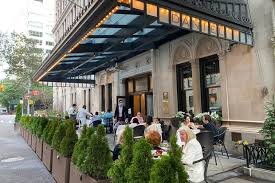
By offering an outdoor option, you not only increase seating capacity, you have a better chance to grab some new customers and gain market share. Plus, by fashioning a fun outdoor ambiance, you will create a lot of buzz in your community.
So broaden your view of what restaurant dining looks like. It doesn’t have to be indoors. The Europeans have been dining alfresco for years! You have a choice. You can throw a couple of tables outside and see what happens, or you can create a wonderful - even magical- outdoor dining experience. Even better, gather some of your neighbor restaurants and join together to make dining outside in your center something customers wish was available year ‘round!
Here are some tips and ideas for making outdoor dining appealing and efficient.
Space
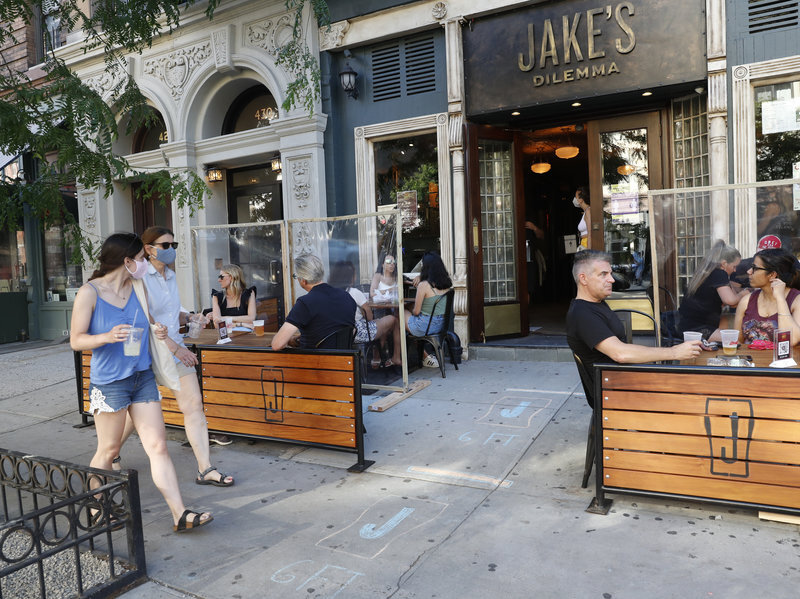
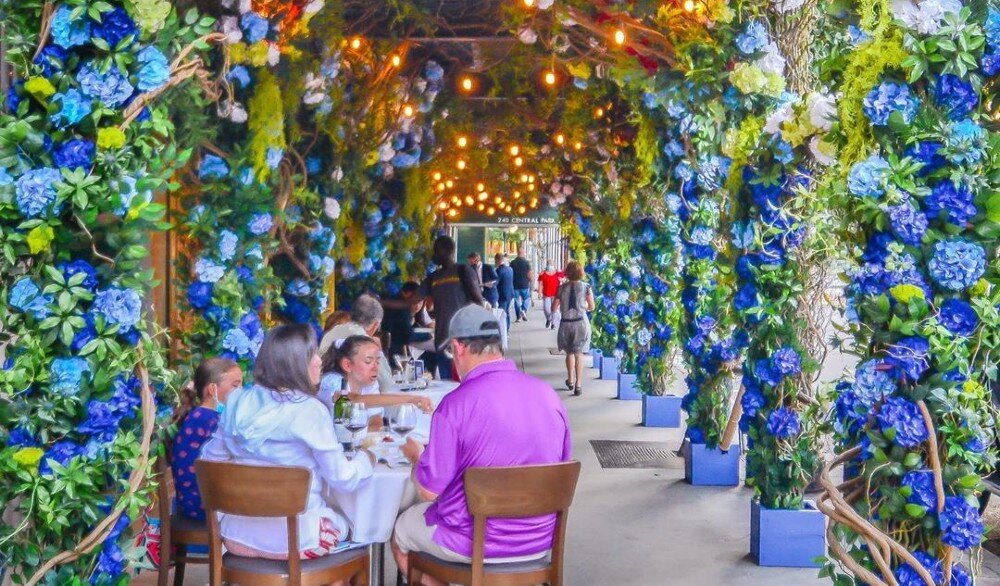
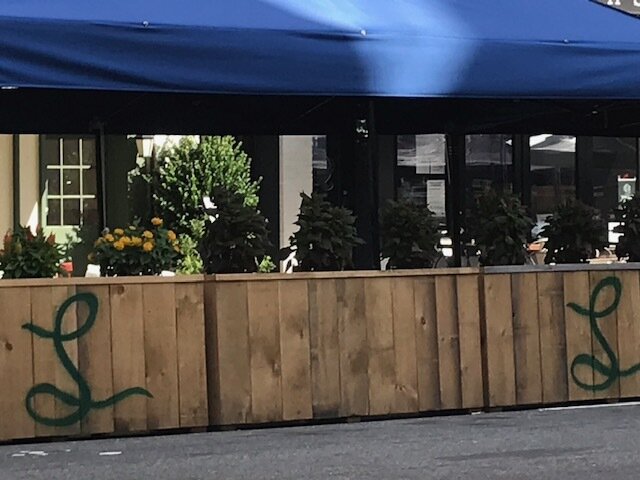
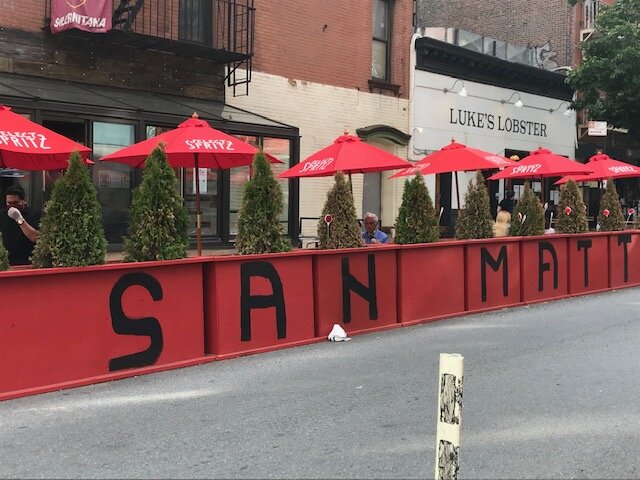
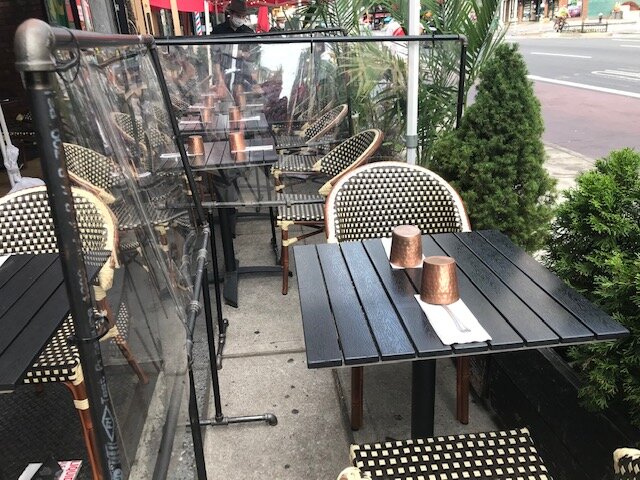
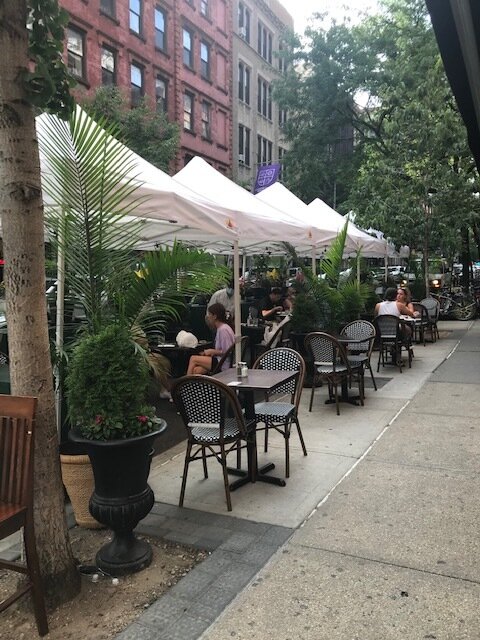
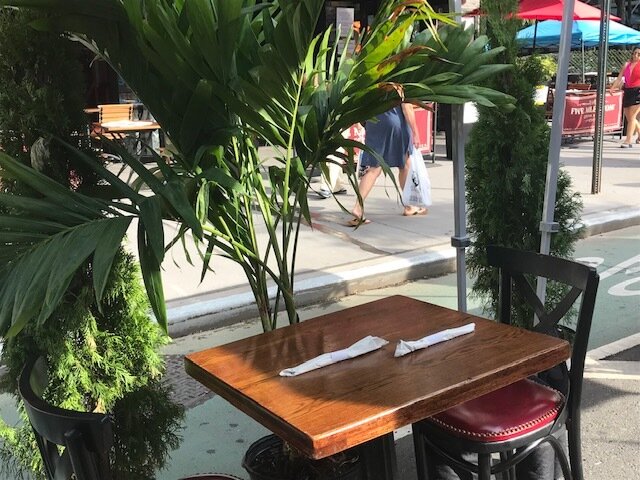
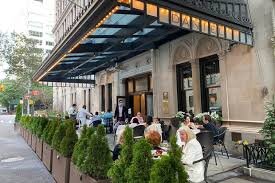
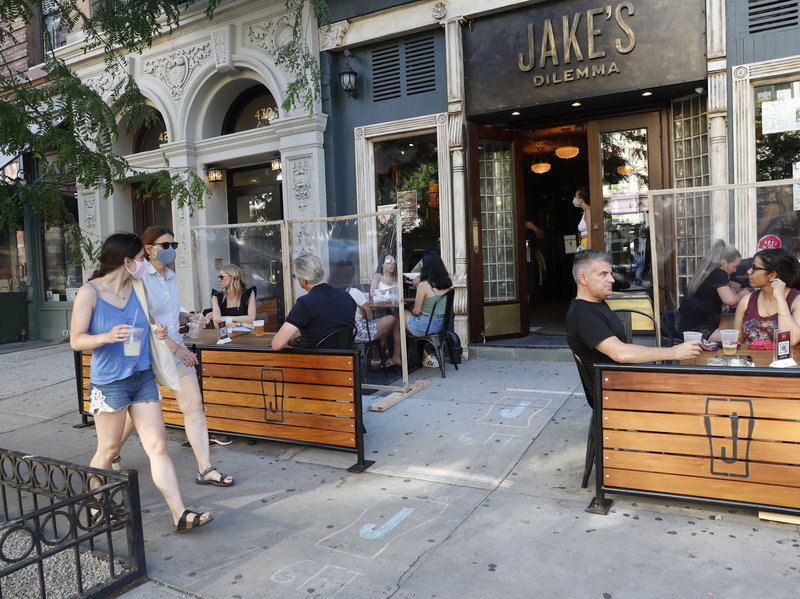
Delineate your new “dining room” with planters, fencing, flower boxes, astro turf or plants to make it cozy and welcoming. Tents, umbrellas, fans and misters are also options to keep guests cool and protected from the elements.
Create ambiance with hanging outdoor lighting and candles. Consider outdoor speakers for music or bringing in live entertainment.
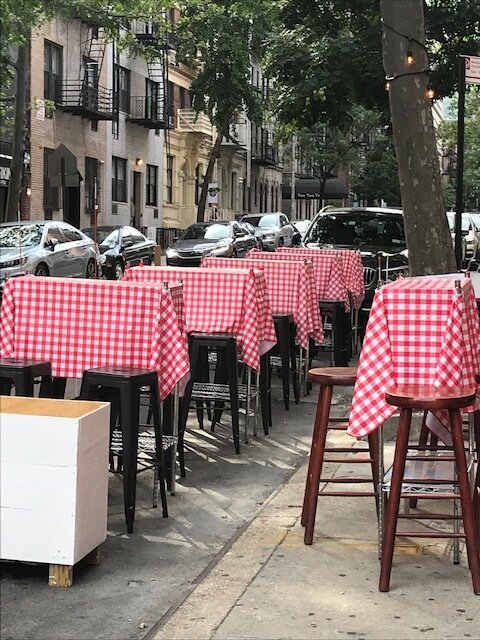
Dress the tables so they are welcoming
Put a sign at your entry that welcomes customers and outlines safety precautions your restaurant is taking.
Really important – be sure the chairs are comfortable! If you’re using metal chairs, provide pillows.


Menu
Adapt/simplify your menu to accommodate longer running times for orders.
To increase sales, offer 2-3 course menus, flights or other bundled options.
Service and safety
Use QR codes so customers can access menus online. This is more sanitary and saves money on disposable menus.
Put self-service water bottles on each table to eliminate need for additional contact and glass handling.
Instruct waitstaff to take entire order at one time. People will understand and this will make your kitchen more efficient.
Offer sanitizer gel at the hostess stand and on each individual table
Set out rolled utensils.
Offer serving utensils in dishes that are meant to be shared so customers won’t be tempted to use their own forks and spoons.
Put trash cans and sanitizer inside and right outside the restrooms.
Of course, make sure your staff and guests all abide by all social distancing and mask mandates.
Branding and Marketing
Look for opportunities to promote your brand. Logos on fencing or facemasks are fun. Encourage employees to bring extra shirts so they always look cool, crisp and clean. (If it’s really hot, give them extra breaks to cool down.)
Once you’ve gotten it all together, let the world know through every channel available to you, including letting your neighbors know. If your new space looks great, send a photo to the local newspaper for additional publicity.
When times are difficult, use the opportunity to take advantage of every resource you have. Right now, for restaurants, the path to increased revenue is right outside their doors!
Until next time remember,
You can do this!
Angel
7 Tips to Help You Prepare for the Recovery Marathon
Short term thinking is going to damage more business than coronavirus! Of course you’re trying to scrape together sales today and recoup the money you lost during lockdown. But more importantly, you need to be looking at the next 18 months and ways to rebuild and reinvent your business for a new (and exciting) reality!
Here are a few tips to get you started in your long term thinking strategy.
1. Preserve capital
Slash expenses wherever you can and hold on to your cash with a tight fist. We don’t know how rough the recession is going to be or what changes you’ll need to make to your future business that will require money.
2. Be ready to answer this question
“What do you sell and to whom? “ That answer shouldn’t be the same as it was pre-COVD.
3. Seek clarity in small bites
None of us seems to have a working crystal ball right now and therefore, none of us knows what the future is going to look like. (Anyone who tells you they have the answers is lying!) So each time you see a clear path, even it’s only to the next step, take pride in that milestone
4. Understand that recovery is not linear
Just because we may hit bottom, doesn’t mean it’s a straight shot back up. There may be plateaus. There may be changes in course. Instead of being surprised, be prepared.
5. Get real data on the situation
Take your personal life, business and perspective out of the equation and research how COVID has affected your category of business and your community. Is unemployment higher because a large company had massive layoffs? Were cases relatively mild? Try to drill down to understand how quickly your community will recover and get a better understanding of how to best serve them.
6. Rehire carefully and with intention
Rebuilding your team is a fantastic opportunity to create a new culture that will successfully suit your future business.
7. Cultivate your own war room advisors
This is absolutely no time to go it alone! Gather together business neighbors, friends, even customers to discuss the future from various points of view. You’re almost guaranteed to find new ideas and inspiration by doing this.
It’s time to let go of the business you used to have and embrace the new opportunities that lie ahead.
Until next time remember,
You can do this!
Angel
The post-quarantine customer profiles - and how to sell to them
Are customers behaving and acting a little different these days? Probably so. As we come out of lockdown, customer behaviors have changed, as have their attitudes. Here’s an overview of the four post-quarantine customer profiles to help make purchasing and marketing decisions as well as to correctly adjust your revenue expectations in the coming months.

Number 1
The Fearless
These are the folks that were at stores, restaurants, salons and gyms the second they open. They are unafraid of the virus and anxious to socialize. They are immediate customers and happy to be able to access shopping and entertainment. Get them into your loyalty program and market aggressively to increase frequency of purchase/visit.
Number 2
The Fearful
The exact opposite of group 1, these are the people who won’t come out of their house until they get the all clear, probably until there’s a vaccine. Unless you are selling necessities online, you probably won’t win these customers back for some time.
Number 3
The Unable
This group is, for a number a reason, unable to leave their homes for physical restrictions or unable to purchase due to financial circumstances. Online necessities and low-cost digital entertainment might be good options. Consider online book clubs and other digital gatherings to keep your visibility high for when this gr
Number 4
The Cautious
This probably represents the majority of consumers right now. They are open and optimistic but adopting a “wait and see” attitude to each new phase of reopening. They won’t be forced into shopping and dining out but, if they feel safe, will dip their collective toes in the water. The most important thing to remember with this group is to market consistently to inspire them to come out and when they do, insure their experience at your store and restaurant is flawless. Safety first is the message here.
Diffusing the great mask debate!
Masks are making business owners crazy!
Whether you agree with wearing them or not, as a business owner, you need to figure out how to diffuse customer situations from escalating and enforcing employee compliance. And still keep your sanity!
I just created a short video, 3 things you can do to diffuse the great mask debate and 1 thing you should absolutely NOT be doing!